Ouray, Colorado Field Trip (Fall 2026)
Overview
From September 28 to October 3, 2026, the Plano Photography Club will visit Ouray, Colorado. Please note that if you are traveling from the Plano area by car, you should allow two days on either side of those dates to get there and back.
Centrally located in Southwest Colorado, Ouray (pronounced "yur·ay") sits in the heart of the San Juan Mountains at about 7,800 feet. It is often called the “Switzerland of America” for its dramatic alpine valleys, steep cliffs, and deep‑walled canyons.
Our trip will land right in the prime fall‑color window, when photographers can expect golden aspens, red oaks, and orange‑hued maples set against snow‑dusted peaks and rugged rock.
Communications
IMPORTANT: To ensure the opportunity to participate in all club‑planned events and activities, attendees must register with the PPC by clicking the button below.
REGISTER FOR OURAY, COLORADO FIELD TRIP COMMUNICATIONS
Field Trip Travel Presentation
At the March 19, 2026, club meeting, Dennis Fritsche gave a presentation in support of the club's upcoming field trip to Ouray, Colorado.
It includes the following information:

- Details about Ouray
- When and Where (including lodging information)
- Reference Materials
- Cautions
- Getting There and Back
- Travel Routes
- Things to See Around Ouray
- Things to See Around Ridgeway
- Ouray to Silverton
- Ouray to Durango
- Telluride
- Mesa Verde and Durango Train
- Ouray Dining Options
You can review or download the presentation by clicking either on this link or the embedded image at right.
References
- Photographing the Southwest: Colorado & New Mexico - Laurent Martres (Amazon)
- Artists on the Loose - Alan Whiteside (Blurb Books)
- Fall Color 2025 Trip to North Carolina (Tips for Fall Foliage and Waterfalls 2024) (PDF)
About Ouray
Ouray originally lies within the traditional homeland of the Ute people, whose bands lived seasonally in the San Juan Mountains and used the area’s hot springs for healing and rest.

Ouray, Colorado | Justin Terveen
In the mid‑19th century, encroachment by prospectors and new treaties pushed the Utes from much of their territory; the town that would become Ouray was later named in honor of Chief Ouray, a multilingual Ute leader known for his diplomacy with settlers, even as he negotiated the loss of ancestral lands.
The modern town took shape in 1875, when silver and gold prospectors pushed into the valley via Bear Creek and the Uncompahgre River, staking the first mining claims and founding a rough frontier camp.
By October 2, 1876, the settlement was formally incorporated as the town of Ouray and quickly grew into a bustling mining center, with hundreds of residents, log cabins, stores, and a post office housed in simple log buildings. Within a few years, it became the county seat of Ouray County, a role that concentrated government, commerce, and services in the tight valley.
At its mining peak in the late 1800s and early 1900s, Ouray served as a shipping and supply hub for dozens of nearby mines, including the rich Camp Bird Mine that produced over a million ounces of gold. The arrival of the Denver & Rio Grande Western Railroad in 1887 linked the town to regional markets, allowing even lower‑grade ore to be shipped profitably and spurring construction of hotels, schools, and civic buildings from the 1880s through the early 1900s.
Unlike many boom‑towns that burned or collapsed, Ouray largely escaped catastrophic fire, so much of its late‑19th‑century Victorian architecture survives, and today its Main Street and core buildings are listed as a National Historic District along with several individual landmarks.
Accommodations
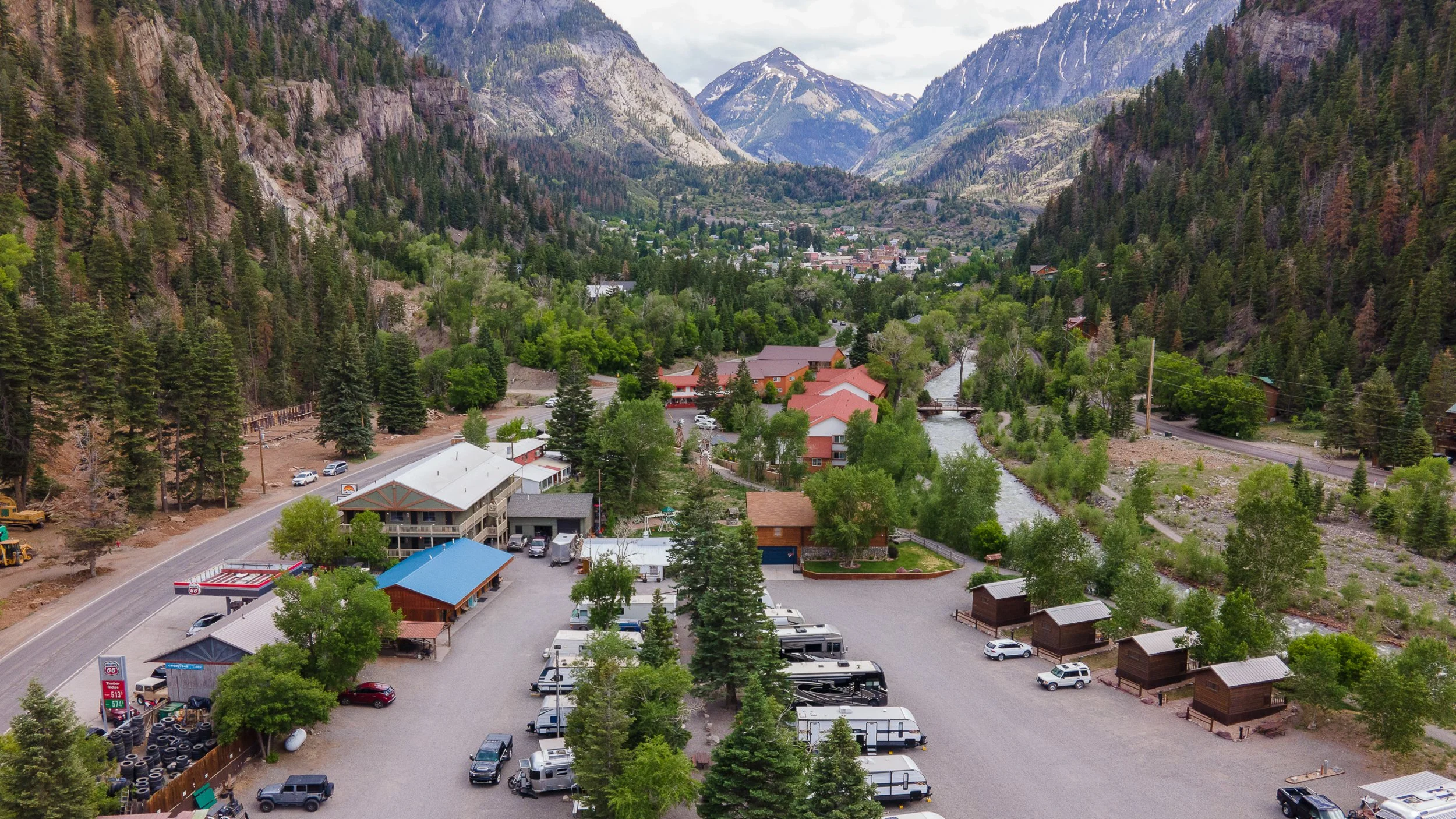
Ouray Riverside Resort | ourayriversideresort.com
You are responsible for obtaining your own lodging.
The PPC will be using the Ouray Riverside Resort (directions) as our base of operations.
Indulge in their deluxe riverfront cabins with private baths, full kitchens, and air conditioning, or cozy up in their rustic cabins, perfect for bringing your furry friends along or traveling with your RV.
They have spacious sites with full hookups to accommodate even the largest rigs.
If you prefer the convenience of a hotel, their comfortable rooms offer stunning mountain views; some even feature full kitchens.
Jeep rentals and a full-service restaurant are also available.
Register now at ourayriversideresort.com/ or call the hotel at 970-325-4523 to book your room.
What to Expect in Late September and Early October
Weather & Conditions
Visitors should expect crisp, cool mountain weather with generally sunny days, colder nights, and occasional brief showers or flurries, especially as you go higher in elevation. Average daytime highs around late‑September and early‑October are typically in the mid‑50s to low‑60s°F, while nighttime lows often dip into the upper‑20s to low‑30s°F.
Daytime and sunrise conditions
Mornings are usually clear and cool, ideal for shooting fall color and frost‑rimmed leaves, but you should be ready for rapidly changing mountain skies: quick passing clouds, afternoon showers, or even a light dusting of snow at higher viewpoints.
The air is relatively dry, so light can be very sharp and shadows pronounced, which works well for landscapes but may require HDR or careful bracketing on bright days.
Nighttime and higher‑elevation conditions
As you drive up passes like Red Mountain or into the higher backcountry, expect temperatures to drop noticeably; roads can be damp or icy early in the morning, and occasional light snow or graupel is possible in late September and early October.
Bring layers (base, mid‑layer, windproof shell), gloves, and a warm hat, especially if you plan dawn‑to‑dusk photography.
Precipitation and Visibility
Historically, October sees a moderate chance of rain or snow on any given day (around 15–20%), but most days are still longer streaks of dry, sunny weather with good visibility. Sudden storms can roll in from the south, so it’s wise to check the local forecast daily and always have a rain‑proof cover for gear and a snow‑capable vehicle if you venture beyond the main valley roads.
Photographic Highlights
- Box Cañon Falls: A narrow, 285‑foot gorge with a footbridge overhead lets you shoot dramatic verticality, water flow, and reflections in tight canyon walls.
- Cascade Falls (Lower Cascade): A short walk from town delivers a classic tiered waterfall framed by trees and cliffs, great for both wide‑angle and telephoto compositions.
- Downtown Ouray: The town’s Victorian buildings are framed by golden hillsides, providing a classic small-town-in-the-mountains composition.
- Hiking and Backcountry Roads: Trails like the Perimeter Trail, Portland Trail, and backroads toward Owl Creek Pass or Dallas Divide present intimate and grand landscape views, reflections in alpine lakes, and varied compositions from foreground foliage to rugged snow-capped peaks.
- Million Dollar Highway / San Juan Scenic Byway: Pull‑offs around Red Mountain Pass and along the highway into Ouray offer sweeping mountain vistas, red‑stained peaks, and roadside aspens backed by snow‑capped summits.
- Ouray Amphitheater: A bowl-shaped valley northeast of town that fills with golden aspens and dark conifers; ideal for panoramic shots and layered depth.
- Red Mountain and Crystal Lake: Rugged, rust‑colored peaks above Ouray, with nearby lakes and ghost‑town mining structures that add history and texture to images.
Final Thoughts
Our trip to Ouray lines up beautifully with both peak fall color and relatively stable, photogenic weather. The combination of dramatic San Juan Mountain scenery, golden aspens, waterfalls, and well‑preserved historic architecture will give us a rich mix of grand landscapes and intimate details for photographers of all levels.
Ouray’s mix of history, geology, and seasonal color should make this one of those trips our members remember and talk about for years.